04.08.26
Buyers Unite to Accelerate the Market for Low-Carbon Cement
The Sustainable Concrete Buyers Alliance launches a first-of-its-kind procurement, calling for proposals to supply low-emissions cement to meet corporate demand.
WASHINGTON, D.C. – Apr. 8, 2026
The Sustainable Concrete Buyers Alliance (SCoBA), a joint initiative of the Center for Green Market Activation and RMI, today launched a request for proposals (RFP) to secure multi-year offtake agreements supporting up to 250,000 tons of low-carbon cement production annually, beginning as early as 2027. It marks the first phase of a procurement designed to overcome persistent barriers that have slowed decarbonization across the construction sector.
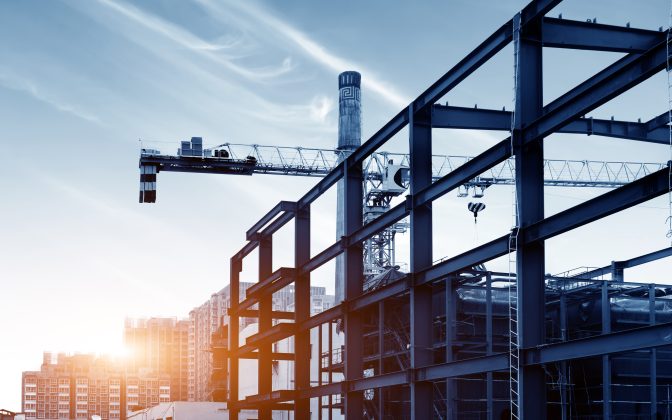
Cement and concrete are vital to the built environment, from housing and commercial buildings to data centers and transportation networks, and global demand for cement is expected to increase to 6.2 billion tons by 2050. Cement accounts for most of the sector’s global emissions, yet emissions-reducing technologies often face geographic and cost barriers to scale, limiting access for many organizations. Through this RFP, SCoBA will enable its climate-ambitious member companies to abate up to 85,000 metric tons of CO2e emissions per year, subject to final commercial details.
The procurement will target offtake from innovative cement producers while sending a catalytic signal to the market. The inaugural RFP is open globally to products meeting the Global Cement and Concrete Association’s low-carbon cement definition of Band B or better, roughly equivalent to at least a 67% emissions reduction compared with today’s industry reference level. SCoBA aims through this procurement to pool buyer demand, secure high-integrity supply, and enable innovative, low-carbon production methods to scale.
“Decarbonizing cement is essential to tackling emissions in the built environment, but progress has been constrained by fragmented demand and limited access to low-carbon solutions,” said Bryan Fisher, managing director of RMI’s industries program. “We’re excited to be entering the next phase of our cement and concrete demand initiative with GMA, connecting leading companies with cutting-edge producers to secure the long-term offtake agreements project developers need to confidently pursue decarbonization projects in this critical industrial sector.”
SCoBA launched in 2025 as a program of the Center for Green Market Activation (GMA) and RMI to pool demand from end-use customers and channel investment through bankable agreements, giving low-carbon cement and concrete producers the confidence to scale. Since its launch, SCoBA has engaged the market to design a procurement that is ambitious, globally focused, and capable of accelerating new production of truly sustainable low-carbon cement.
“Our outreach to the market confirms a growing pipeline of low-emissions cement solutions seeking credible demand,” said Kim Carnahan, CEO at GMA. “SCoBA’s innovative procurement brings that demand together, sending a signal individual buyers cannot achieve alone. This is about turning climate ambition into real market movement.”
The procurement will use a book and claim framework developed and recently launched by GMA and RMI, allowing companies to support low-carbon production even when the physical material cannot be delivered directly to their projects. Buyers purchase verified environmental attribute certificates representing the emissions associated with low-carbon cement or concrete, which they can retire and count toward Scope 3 goals, while the material itself is deployed where it is most practical. This model helps overcome geographic and logistical constraints that have historically limited access to lower-emission building materials and provides producers with streamlined access to committed buyers.
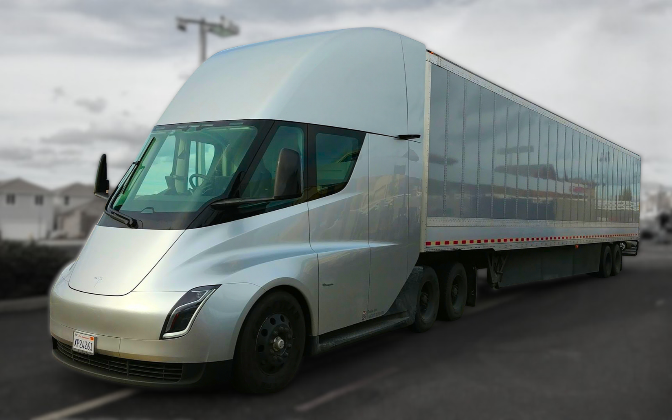
SCoBA’s procurement builds on proven demand aggregation models pioneered by the Sustainable Aviation Buyers Alliance and expanded to additional transport sectors such as maritime (Zero Emission Maritime Buyers Alliance) and heavy-duty trucking (GMA Trucking). This program represents a second application of that approach to the built environment; the first being the Sustainable Steel Buyers Platform.
Low-carbon cement suppliers are invited to download the RFP and submit proposals by June 19, 2026. Interested parties can also register for a webinar, scheduled for April 15 at 11AM ET. Companies with Scope 3 cement and concrete emissions who are interested in purchasing through this pilot procurement can explore SCoBA membership by emailing info@buildscoba.org.
Media inquiries please contact:
Amy Yanow Fairbanks, Strategic Communications Manager, RMI: media@rmi.org
Alison Greene, Communications Manager, GMA: pr@gmacenter.org
About the Center for Green Market Activation:
The Center for Green Market Activation (GMA) is a US-based, globally focused non-profit. Through innovative procurement approaches and collaborative alliances, GMA catalyzes and scales the uptake of low-carbon goods and services within carbon-intensive industries such as aviation, maritime, trucking, cement and concrete, and chemicals. With collective decades of experience in environmental markets and alternative fuels and materials, the GMA team works to standardize new, green markets and forges mutually beneficial partnerships between climate-focused companies, suppliers, and mission-aligned non-profit organizations to channel funding to critical climate technologies in pursuit of accelerated sectoral decarbonization. Learn more at gmacenter.org
About RMI:
Rocky Mountain Institute (RMI) is an independent, nonpartisan nonprofit founded in 1982 that transforms global energy systems through market-driven solutions to secure a prosperous, resilient, clean energy future for all. In collaboration with businesses, policymakers, funders, communities, and other partners, RMI drives investment to scale clean energy solutions, reduce energy waste, and boost access to affordable clean energy in ways that enhance security, strengthen the economy, and improve people’s livelihoods. RMI is active in over 50 countries.
Related News & Resources