
10.27.25
Green Markets Day 2025 – RFP Winners Announcement followed by Big Bet: Unlocking the Future of Trucking
Prior to the “Big Bets: Unlocking the Future of Trucking” panel during Green Markets Day 2025, GMA CEO Kim Carnahan revealed the winner of GMA Trucking’s pilot RFP: Nevoya.
In this panel discussion during Green Markets Day 2025, Andre de Fontaine of GMA is joined by Christoph Wolff, CEO of Freight Centre, Melissa Bauer, ESG and Sustainability Strategy Lead with eBay, and Sami Kahn, Co-Founder and CEO of Nevoya, the winner of GMA Trucking’s pilot RFP.
See below for full transcripts of both videos.
GMA TRUCKING RFP WINNER ANNOUNCEMENT
KIM CARNAHAN:
GMA Trucking is the third buyers alliance that GMA had the pleasure to help stand up and run. And frankly, it’s the one that we get the most questions about. Folks wonder why companies can’t just contract directly with an EV operator. I know that our next panel will talk a lot about exactly why that is often the case, but it’s the same in all of our sectors, the devil’s in the details.
EV trucks run two to three times the cost of a diesel equivalent today, and getting them on the road requires major new and expensive infrastructure. These are costs that most customers aren’t willing or able to pay, and that makes getting any particular route to FID very challenging.
Now, we know that these challenges are real because EVs make up less than 0.1% of all heavy-duty trucks on the road today. A book and claim approach like the one that we use in GMA Trucking and the buyers alliance that we’re going to talk about in the next session can get new routes off the ground faster, helping to get heavy duty road transportation on track to meet the sector’s net zero climate goals.
Here is a snapshot of our competitive procurement process that we’ve run over the past six months. We had 36 distinct bids from 9 different carriers. We shortlisted 15 bids from six carriers. We then conducted an extensive due diligence process on 3 finalists, combining our own financial analysis with deep technical analysis by a third-party consultancy.
So after months of competition, analysis, head-to-head evaluation, one company rose above the rest. And today, for the first time, I am absolutely thrilled to announce this trailblazer that will lead this first of its kind deployment, Nevoya.
[Applause] Yay! I’m going to say a little bit more about this badass company. Nevoya is a San Francisco-based electric trucking carrier founded in 2023. They impressed us with their AI solutions and AI optimization, which maximizes the use of their vehicles and maximizes, therefore, the resulting emission reductions.
Nevoya is putting in place a brand new route from Houston to Dallas, thanks to GMA Trucking’s procurement. This will be 40 new Class 8 battery electric trucks on the road, the largest known single deployment of Class 8 battery electric vehicles in Texas, and it’ll double the total number of EV trucks on the road in Texas today.
I could not be more psyched that GMA Trucking and all of our members get to work with this amazing company. And so now I’d love to invite Andre de Fontaine, our managing director, up onto the stage to introduce our next session, where we’re going to talk about this amazing procurement.
BIG BET: UNLOCKING THE FUTURE OF TRUCKING
ANDRE DE FONTAINE:
Thank you, Kim. I’m not going to talk much at all. The most important thing for us is to unpack this opportunity and this deal with presentations and discussions from the folks that are participating in it directly. So let me start.
Sami, if you can come join, take a seat. Sami Kahn is the CEO of Nevoya. Thank you.
And then we have Melissa Bauer from eBay, one of the important participants in this process on the buyer side.
And last, but certainly not least, it was a pleasure working with the Smart Freight Centre throughout this process. We have Christoph Wolff, CEO of the Smart Freight Centre, who’s going to offer his perspective as well.
But before we get into the specifics of the deal itself, Christoph, I was wondering if you could help us put this a little bit into context. Smart Freight Centre has been involved on this issue for a long time. Why should we care about heavy duty trucking? Why is it difficult? Why is this important?
CHRISTOPH WOLFF:
First of all, Andre, thanks for having us. I also enjoyed the strategic partnership with GMA. So maybe a few words on SFC because not everybody in this room may know who SFC, Smart Freight Centre is.
So we are a global platform, 12 years old, have developed the emission accounting standards for everything in freight. So work with 200 global partners on scope 3 accounting and are very much besides the accounting itself about scaling solutions.
So that’s what actually brings us to book and claim. So, we have over the years defined some emission accounting, market-based measure emission accounting. Now more normative piece called the Specification and together with RSB actually. So we had the announcement earlier today, we have established the so-called Book and Claim Community and we want to work with you as a partner with that.
So now trucking, trucking is a hard to abate sector. So– and the application of book and claim in trucking is what I would say at the beginning.
So first of all, I mean, also under GMA, so SABA and ZEMBA were first because I think it’s simply a kind of exchange of fuels or basically fuel solutions. In trucking, it’s more complex. Now, but it’s important. It’s 10% of global emissions. But it’s a much more complicated environment for a variety of reasons.
And yesterday, some of you may have been to our publication of the 2026 edition of the Bloomberg, our partnership with Bloomberg Commercial Vehicles Factbook for Investors. And that actually gives you a full rundown of all these complications. So it starts with the, and we’ll hear about it later on, the upfront purchase price is much higher. So it’s a cost. At the end of the day, commercial vehicles are being bought by fleets, and they are being bought by fleets on a cost basis.
So it’s all about economics. So not about taste, it’s about economics. And that needs to work in a very specific environment. And the upfront cost is an issue. But it’s a CapEx OpEx shift because the running costs are a lot lower. And the application, if it works in practice, it’s very much locationally dependent. So you have to really go into the nitty-gritty. So the total cost of ownership that you read in literature in the practice don’t matter. So you have to actually look at your own use case and say, with your terrain, with your utilization of the trucks, with– but basically, all the factors, the energy, the energy purchase, the diesel parity, or the diesel equivalent diesel price, does it make sense?
And only if it makes sense, and if there is some guarantee that this is not like a one-off thing, but it’s actually going to be there. You have a consistent actually procurement for your truck, so volume for your truck, then as a fleet you’re going to go there. And now we have to actually make sure that in practice all these different boxes can be ticked and that at scale with then hopefully lower truck prices, because only with this lower truck, bigger volumes, OEMs are willing to lower prices. If all of this is met, then we see more.
So today it’s actually single digit. So in the US, it’s actually, I think it’s 1%, in Europe, it’s like 3% of new sales. In China, it’s like 15% of new sales. So the 100,000 electric truck on the road is basically a China story. It’s 90% from China. a variety of reasons, because they have been focusing on easily electrifiable use cases, like in the mining sector, in portage, we have a portage alliance, and so on. So we have to focus on these and actually book and claim, and we will probably get to that, can actually play a major role in making this more economical.
ANDRE DE FONTAINE:
Okay, thank you, Christoph. Great overview.
Sami, let’s try to put that into slightly more practical current terms. You’re trying to make a business out of this. Christoph talked about it’s more expensive. It’s location dependent. It sounds difficult. How are you making this work as a new entrant into this market, really pursuing all electric, zero emission freight services?
SAMI KHAN:
Yeah, thanks, Andre. Well, first off, just before we get onto that, I do want to say one thing, which is massive, massive thanks to the GMA for getting this procurement across the line. I don’t feel like you guys get the credit that you deserve for the amount of work that you put in. And in particular, Andre, Sam, and Clayton, who have worked tirelessly to get this done. So just want to give a round of applause because I think for every hour that we put in to getting this done, these guys have put in hundreds. So it’s —
ANDRE DE FONTAINE:
You haven’t gotten to the contracting part yet.
SAMI KHAN:
Yeah, exactly. Yeah, the devil is in the details.
And when it comes, for us, when it comes to deploying new electric trucks, we really see three key drawbacks.
So the first is that it can actually be really, really inefficient when you’re dealing with direct procurement. And the reason is that you’re really narrowing down the pool of potential customers that you can sell to, because you’re looking for those customers who really care about EVs and are willing to go that extra mile and perhaps pay a premium to do so. And so in narrowing down that market, you’re naturally producing quite an ineffective network, because you might have one customer in Southern California and then another customer in Northern California, and you’ve got to try and find a way of pinning all of these customers together. And that’s why at Nevoya, we’ve been building this AI-enabled technology which actually allows us to do this in a really efficient way.
But another thing we see is also the underwriting of the actual investment and the vehicles. As I alluded to before, these vehicles cost two to three times more. And the other issue that they have is that they’re very, very new. It’s new technology and therefore debt and infrastructure providers are unwilling to underwrite this initial investment because they don’t know what the residual value is going to be.
And then the final thing we see is the infrastructure. Ultimately, we have to deploy where there is charging infrastructure for these trucks. And today, that is all concentrated in markets and in states where there are heavy incentives. So that means that some of the kind of lower hanging fruit or the heavily trafficked markets, such as Texas, which actually make more economic sense because electricity is cheaper, because land is cheaper, they get forgotten about because they don’t have the right incentives in place to actually procure and put these vehicles onto the road.
So amazingly, book and claim can actually get rid of all three of these issues at one time. So firstly, when you think about those inefficiencies, by packaging up the EACs and selling them separately, you can then sell to the rest of the market. And therefore, you can look at the entire market and think, where can I get the most efficiency out of these vehicles? And that’s why we’ve chosen Houston to Dallas, because that is a very, very heavily trafficked bi-directional route, which means we can get 95%, 98% utilization out of our trucks. And ultimately, that’s where you get a much lower total cost of ownership.
The second thing that I alluded to was around the investment. And here, having a long-term off-take agreement with a reliable partner, such as eBay or some of the other members of the GMA alliance, means that we can then go to debt providers. And instead of giving them this vehicle to underwrite, we can say, “Hey, why don’t you underwrite this long-term four-year contract for these off-takes?” And that’s a much easier sell to them. They understand these financial instruments, they’re able to underwrite them, and they’re able to then give us the funding we need to go and get these trucks on the road.
And then finally, with respect to infrastructure, again, it allows us to actually look at a map and think, where does this make the most economic sense? And that’s why we landed on Texas, as I said before, where economically these trucks make a lot more sense than some of the other markets where we’re seeing a high uptake of electric vehicles today.
ANDRE DE FONTAINE:
Okay, terrific. Thank you, Sami. Melissa, let’s turn it over to you now, representing the buyer’s perspective. Obviously, you can’t do this deal without a customer. So what was your motivation for getting involved, and what are the benefits that you hope to see from participating in this procurement?
MELISSA BAUER:
Yeah, so we really view book and claim as a real unlock for us. And we think it’s a big unlock for actually the entire industry. Because when we talk about direct procurement of electrified vehicles, you’re leaving out a really large chunk of capital, which is all of these companies like eBay that have really aggressive science-based targets that are really interested in putting their capital towards decarbonization, but we do not ship on a container basis. And so we cannot contract directly with a carrier for the most part and say, we will electrify this particular route or this particular truck.
And so we are not the only ones in this place. And so book and claim allows us to use our capital and use our investment dollars to look at ways of decarbonizing the entire system, and really putting our financing towards that, rather than we’re looking at one particular corridor or one particular carrier or those kinds of things.
And as a buyer, what’s also the benefit is these are really high-quality claims. So I can put this through my financial and accounting assurance. I can put this towards my SBTI. I can put this towards my annual inventory in a way that is getting through our traditional accounting heads.
And so we think we are very excited because it gives us an opportunity to really start making actual decarbonization progress towards our science-based target, which, you know, truck freight represents or transportation emissions represents 84% of our scope one, two, three and combined. It’s the ball game for us. But if people will only talk to us about, let’s make sure that your yard is electrified or your fleet is electrified, or let’s look at route optimization or container level optimization, we haven’t been able to play in those games.
But if someone says we have a mechanism that is going to offer you really high quality credits that your investors will believe in, that the standard setting organizations will believe in and can count, and we can look at actually decarbonizing the entire sector, that’s something that not only us, but a lot of other companies, it provides the unlock to participate in this problem in a way that hasn’t really existed before.
ANDRE DE FONTAINE:
OK, that’s great. Melissa, let’s stay with you, because I want to use part of what you just said to bridge us into what’s next. You talked a little bit about high-quality transactions, high-quality attributes. What is it that you look for? What determines high quality for you? And do you see yourself doing more of these kinds of deals in the future? Or what might hold you back from doing more?
MELISSA BAUER:
So what has been holding us back, and I can say, is this, can I put it towards our SBTI? I’m just gonna be completely frank. And that’s what it is. The second I go to my CFO and I say, “I want a big old check,” and they’re like, “Great, what’s this gonna mean to our inventory?” And I say, “Absolutely nothing.” That becomes a very hard sell.
So on the previous panel, my colleague, I think it was on Meta, I was like, I cried when the new guy, and I was like, oh my gosh, thank God we were, I remember we were all at Smart Freight Week, I think, this year when the new guidance came out, and there’s literally like, people popping champagne. I was like, this is going to be great.
So I’d say that is what has traditionally been holding us up. This is by no means the first. This is the first step of many. We signed our first sustainable SAF fuel, sustainable aviation fuel for air. We inked our first deal for that in January. This is the first step of many, and we really look at this as a great way to bring other stakeholders. How do we get procurement? How do we get our auditors? How do we get everybody comfortable with this? And then really start taking a really portfolio approach.
But to the first question is, what are we looking for in these? Does it align with GLEC? Does it align with the latest greenhouse gas protocols? Does it align with SBTI? Can I get it through my assurance process? And so those are the things we’re really excited about with this.
ANDRE DE FONTAINE:
Let’s stay on the theme of what’s next. And Sami, maybe if you can talk about this for Nevoya. Are you guys growing? How do you see the future unfolding? How are you using this deal to move ahead? And then also, we spent a lot of time talking about book and claim, but you also provide physical, low-carbon trucking services. How do you see the balance between those two mechanisms currently and how they might change over time?
SAMI KHAN:
Yeah, it’s a great question. Sometimes when we talk to people about book and claim, they envisage it as a competitor to direct procurement. And for us, we see it completely differently. We actually see book and claim as a catalyst to get into new markets and to alleviate some of that cost pressure so we can do more direct procurement.
Again, taking the specific example of Texas, I actually looked back through the RFPs that we’ve been looking at from a direct perspective. Every single one of our customers has been looking for capacity in Texas. And every single one of them has not been able to find that capacity until now. With this deployment, we can actually go and serve those direct customers in Texas and actually give them direct access to low-carbon solutions. So it’s not this either-or approach.
And for us, we want to continue to go out and use book and claim as the mechanism to get out into new markets, to underwrite that initial investment, particularly with respect to the trucks and the infrastructure, but then we’re going to go out and sell that directly to customers. And in certain instances, you can do both with the same customer, and that’s where you get a really, really attractive relationship where they can help you underwrite that investment, but you can also decarbonize some of their direct procurement where maybe they don’t quite have the scale that they would be able to invest in it just themselves.
So we don’t see it as an either/or approach, and we really, really see book and claim as just the start and catalyst that gets us into markets, but really we have to focus on the direct procurement as well, because that is how we’re going to decarbonize the market as a whole.
ANDRE DE FONTAINE:
Great. And Christoph, maybe you can comment on that as well, because Smart Freight Centre has been running some really important demand aggregation programs focused on physical procurement. How do you see these two mechanisms working together or not over time?
CHRISTOPH WOLFF:
Absolutely. So we are a big fan or big, actually, protagonist of book and claim to scale low-carbon solutions. I think you mentioned the GLEC framework, so our colleagues actually wrote the first market-based measure mission accounting guideline based on GLEC in 2020. So this has actually grown ever since in importance.
Now what’s really cool now with you as winning this prize, so we have a second way of working together, which is on the I-10 corridor, which is, so we have this consortium since two years from covering from Port of Los Angeles into Texas. And so Nevoya is part of that. And so we have now the, and there’s, I mean, there’s quite a number of actually shippers that are part of the coalition in this room. So thank you very much for working with us on this.
So now we have the great opportunity to connect in a project, physical procurement, and virtual procurement, because I think there are, I think we still have to work on this, how to precisely do that. So I think you, I mean, in the RFP, I mean, obviously, these, your claims need to be, or your proposal need to be locationally anchored. So I think one has to work on what are the boundaries of this location anchoring and how does it fit together, because I think we all are very much focused on integrity of book and claim. So you can’t just basically take claims from a different legal category in a different geography, in a different segment of the market, and then throw it all together and say, it will work. No, it won’t. So we have to be precise. We have to be precise and diligent.
But we have the great opportunity now. So I-10 and then we have our ZET SCALE program, which kind of scales the adoption on the collaboration with the 15 to 20 motivated shippers actually across more corridors in the US, also work on the portage. And so we have the great opportunity now to make it work, to fit it together.
ANDRE DE FONTAINE:
Great. Thank you for that, Christoph. And I think there’s a lot of really great analysis that we’ve started to do that thinks hard about this question of how you combine physical procurement with book and claim. Tomorrow at the Smart Freight Centre’s Charging Ahead Together event, we actually have an hour devoted to getting into that in a little bit more detail. So if you’re not signed up for that event, you might be, maybe I’m not doing the right thing here, inviting people to your event. But it’s going to be really great.
I think conceptually, though, the important thing here to note is that, as Sami said, for a while there’s been this view that these are competing approaches, that there’s a zero-sum investment landscape. Every dollar that you put towards book and claim is a dollar less that you can use for physical procurement. And I think our answer to this is that that’s actually not the way it is. That if you can do both at the same time, you can reduce costs for everybody and you can actually produce more investments, so you’re growing the pie rather than carving up an existing finite set of resources across two different mechanisms. So this is going to be a really important next step for us and the Smart Freight Centre and all the stakeholders that care to participate. We’re really excited about that.
I think we actually do have some time for questions from the audience. So I will open it up. If you raise your hand, I think I’m seeing Sam beginning to mobilize, so he will run out with a microphone. And if you could just say your name, who you’re with, and then state your question. And if it’s directed to a particular person, please let us know so we know who to answer.
JULES KORTENHORST:
Jules Kortenhorst, RMI. Congratulations, Sami. Congratulations, Chirstoph, this sounds like a great compromise. How does charging fit into this? Because that seems to me to be the additional piece of the puzzle that you need, whether it is from Dallas to Houston or Los Angeles to Texas, how does that fit into the picture?
MELISSA BAUER:
Christoph sits up, gets ready.
CHRISTOPH WOLFF:
Let me. You should say something about that as well. Do you want to say go first?
SAMI KHAN:
I’m happy to go first from our perspective. So the GMA Procurement and the RFP is allowing us to put charging in place in Dallas and Houston to enable this route. So without it, currently there is no charging for trucks in Texas. Without it, frankly, I think it would still be many years off because there aren’t public incentives in that market to go out and build heavy-duty charging infrastructure.
However, because of this procurement, we have been able to make an investment case for that charging infrastructure and then work with our partners to actually get that in the ground and start working on it. So it’s completely accelerated that entire market, frankly, by several years, in our view.
MELISSA BAUER:
Can I bring up something? I’d say from a buyer perspective, this is something we were really interested in because we had conversations of, that’s great if you have electric trucks, but what if you’re charging them on a dirty grid? And so the fact that GMA and Nevoya have thought about this and what does this mean for RECs and green charging, once again, going to that integrity of the credits was really a selling point for us.
CHRISTOPH WOLFF:
Great. So no, obviously, Jules, great question. So charging is absolutely necessary, no electric trucks without charging.
And I think from the work that we’ve been doing together in this consortium for the last two years, so it started with actually exactly mapping the flows, down to postal code, frequency and everything, that basically build a model, and say, OK, based on– in order to get this economics of this working, high uptime, high utilization, because only with this high utilization, the electric truck economics will work. So you have to do that.
Then where would the charging need to be? So actually, and we had actually also collaborators at Terawatt and we have collaborators and a few others. So there’s actually quite some parties, there’s Green Lane, there’s WattEV, and there’s quite some parties on that corridor that actually have offering. And you need to pluck together public charging opportunities. You need to look at the grid reserves. So then it becomes a grid, actually, is important. With depot charging, also. And you can have shared charging, because that brings the cost down.
So you need to feed all of this into the economic model. And I think we have made great leeways. I think in order to cover the corridor, I don’t know what the latest numbers were. You need like five or six charging stations, and I think they’re being built. Some exist, others need to be built. They could probably connect well to the Texan corridor, et cetera.
So I think indeed, so this is absolutely key. So charging is important for these infrastructure finance is another one, by the way, because you have a lot of small operators who still may all work out, but then the ROI for the small operator may still not work if the capital costs are too high. That’s another piece. So you also have to solve for that.
ANDRE DE FONTAINE:
If there’s other questions, please raise your hand. As folks think of other questions, I’ll just add a couple of quick points.
So one, yes, bids were evaluated on a total cost of ownership basis inclusive of the charging. So that gets wrapped into the premium.
And then I would say, just to build on Christoph’s point, of all the sectors that we’re active in, trucking is the one where the benefits of demand aggregation are most immediately obvious. A lot of that is because the more trucks you can pile on a given charging network, the lower the cost because you’re spreading those across many users. You see those benefits of bringing multiple buyers in more quickly than you do in sectors like aviation or cement and concrete.
NICOLE GENEAU:
Thank you. Nicole Geneau, Cleantech Project Investment. We’ve been talking a lot about electric trucks on the panel so far. I wondered if you could comment on fuel cell electric vehicles and the complexity of hydrogen fueling and availability of green hydrogen.
ANDRE DE FONTAINE:
I’ll start. When we launched the RFP, we wanted net zero solutions. So we did not exclude fuel cells. We did, however, exclude biofuels. We wanted zero tailpipe emissions. We had some opinions about the scalability and sustainability of biofuels for road freight, but we did not specifically exclude fuel cells.
It just so turns out that the cost advantages currently for the use cases we’re looking at electrification appears to be the clear winner. I think there are going to be certain discrete use cases where fuel cell hydrogen can make sense. Maybe that’s something we tackle in the future, but right now we feel pretty comfortable with electrification as a solution for heavy-duty trucking.
SAMI KHAN:
Yeah, I might offend a few people here, but I’ve also spent three years doing nothing but looking at the economics of running zero-emissions trucks, and compared to EVs, fuel cells make no sense. The economics just don’t work. Maybe they will 20 years in the future, but there is a lot of hurdles that they have to overcome.
And frankly, green hydrogen should go into the areas of the market where there is no alternative. Like, how are we going to make green ammonia if the hydrogen doesn’t go there? So why are we concentrating on a solution that, frankly, in my mind, doesn’t make economic sense when we’ve got another one in the shape of EVs that does?
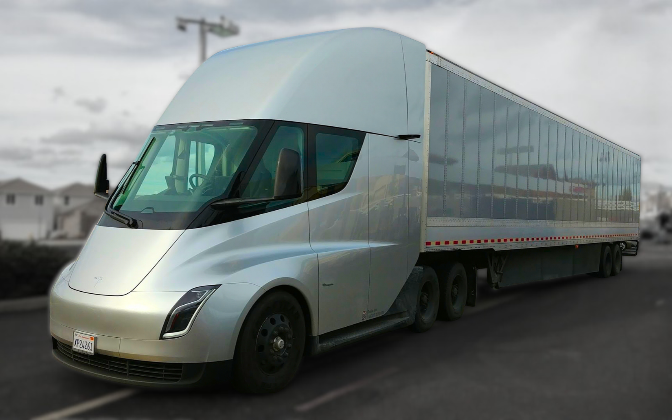
And when you look at the technology that’s coming through the pipeline, if you look at the Tesla Semi, you look at the cost of electricity that we’re able to get through charging now, these vehicles are already economic on certain routes and certain use cases, and that’s only getting better.
So personally, as I say, I would spend a lot of time looking at this. We spend a lot of time comparing. We believe hydrogen is a complete distraction. We think EV is the way forward for both short-haul and long-haul zero emissions trucking.
ANDRE DE FONTAINE:
Okay, I do have a question that came in from the computer, which is and this one’s a bit of a silly one I’ll start with, but has GMA thought about calling it TUBA, the Trucking Buyers Alliance? And so the answer is no, we haven’t, that one hasn’t crossed yet.
But a more serious question is, regarding utilization, we’ve talked a little bit about how it’s important in trucking, and the questioner is asking for a little bit more details about procurement like this can drive increased utilization, which brings the cost down. Sami, you might be best positioned to talk about that.
SAMI KHAN:
Yeah, I love this question. And this was honestly the thing that got me the most excited when we first got wind of the RFP was starting to do the analysis and starting to run the numbers because what you realize is that it perfectly aligns everyone’s incentives around maximizing utilization. And I often show people this kind of cost curve because we are basically able to generate more and more revenue because we’re able to generate more credits the higher our utilization is, but also the cost of running those miles is coming down the higher that utilization is. So we’ve got effectively a double incentive to go out and maximize the utilization of these vehicles.
And as I said before, that’s coupled with the fact that we don’t have this distraction of having to find those limited customers that are willing to pay a premium or are willing to underwrite the investment. And because the trucking market is so huge, because there is so much freight on the roads in these areas, we’re able to find markets and find areas where we can get really, really high utilization. That not only brings the cost down for us, which ultimately brings down the price of the credit for our end customer, but it also allows us to maximize the greenhouse gas reduction that we’re making through our trucks.
So everyone’s incentives are aligned, and that’s why I think this is such a neat solution.
CHRISTOPH WOLFF:
If I can add to that, so indeed you talked about the cost curve and I think with high utilization and I think there’s a kind of a proxy number. You always say like if a truck runs like 300 to 400 kilometers a day, so consistently, predictably, so I think it should be in the money, more or less.
So now you find applications where that is the case, so that’s why we have other countries like a cement initiative. So we have a mining initiative, because we know this, you’ve got this predictability and portage. Portage is wonderful. You need to basically from a trucking point of view, because you need to empty the ship and load the ship. So you have bi-directional flow, like 150 to 200 kilometers. Great. So this is exactly the kind of thing that you need.
And this cost curve, you don’t have that in with diesel, so it actually doesn’t go down, so this is a key difference. We talked yesterday at the Bloomberg New Energy Finance thing about now the finance sector. So I think if you’re trying to educate basically lenders into it, and some lenders, for example, have fleet procurement where they say, okay, if your truck runs more than like X kilometers a day, then your interest goes up. And I say, okay, those guys haven’t gotten it yet. So this is exactly the way how to not finance electric trucks.
And I think there’s a whole residual value conversation about, I think it’s– we have much more data about that actually the trucks can run much more. I think currently it’s often being priced as if after like five years the battery was zero value. This is not true. After five years or seven years, actually it’s still at 70%. It can go to a second life. The materials are still there. You need to recycle them, etc. So I think some of these financial structures need to be completely rethought, and that would also unlock a lot of value, a lot of actually opportunity.
GABBY LEEDS:
Hey, I’m Gabby Leeds from Brambles. I just had a question more around the book and claim mechanism. So do you view this mechanism as sort of a permanent player in procuring this kind of vehicle? Or do you see it as a temporary until we get kind of that critical mass and then we’ll have to kind of detangle it to direct procurement from book and claim?
ANDRE DE FONTAINE:
I will start. I mean, I do, we see book and claim as a catalytic mechanism, which will be most important in the early stages of trucking and these other markets that we’re active in. And so certainly there’s a point at which you’re reaching scale and the services are more or less ubiquitous and you don’t need it anymore.
And so I don’t think that it’s permanent, especially in trucking. Aviation might be a different story just because there’s a value chain barrier that prevents the end customer from ever really buying the sustainable aviation fuel. But in trucking, you can procure it. And so we would think that in this sector in particular, you would want to begin to move away from it, at least in certain geographies.
So I don’t think, we get asked this question a lot. I don’t know that it’s on today, it’s off tomorrow type of binary, yes, no. It’s more perhaps we evolve the mechanism in a certain manner, increase the ambition, or try to deploy it in certain geographies where you might hit market saturation in some parts of the world, but in other places, it could still be quite useful to use book and claim to drive progress.
So generally speaking, we don’t see it as permanent, but what that looks like over time, unclear at this point.
NICO DE GOLIA:
Yeah, hi, my name is Nico with Microsoft. I have a three-part question, which I’ll try to be succinct on. So the first part of the question, and most of this is directed towards Sami, and first of all, congratulations to Nevoya, very excited for the company and excited to see where you go. Would love to learn a little bit, we’ve talked, I think, about the first part a lot, the intersection of the physical and the book and claim. From you as a carrier, how does this, how does it unlock? Like what are, would just love to hear some more high level thoughts about, hey, how do you leverage book and claim as an instrument to accelerate the growth faster than you would have previously? That’s part one.
Part two is we’re in an era in the United States where there are opportunities for regulatory streamlining. I’m trying to put as positive of a spin on that as I possibly can. And so we’d love to understand and, you know, what are some of the regulatory hurdles to electric truck deployments that might be able to be streamlined at the federal level to enable you to deploy more and faster? I’m thinking around, you know, driver hours of service, mandatory rest periods, all of those things which are critically important for safety. You know, so we’d just love to hear a little bit more about that.
And then last but not least, there are 100 people plus in the audience here. What can we do next week when we get back home to help? How can we unlock more electric trucking together here as a community of people in this room? We’d love to hear your all’s thoughts on that. And that’s open for everybody here on the panel. So thank you.
ANDRE DE FONTAINE:
And for the record, those were three distinct questions, Nico. That was not a three part– But Sami– But they were all good ones.
SAMI KHAN:
Yeah, so I think starting off– I’m going to have to try and remember all these– but starting off, the direct versus indirect piece, I think really here, we use both sources of information. So where we are looking to deploy with respect to where we know we can get high utilization for our trucks, as well as where our direct customers are looking for capacity.
And ultimately, it’s the confluence of both of those things that dictate where we’re going to use a book and claim deployment to get trucks on the road. So for us, this is just the start of this deployment. And it’s not– we didn’t just do this just as a single deployment where we would just run these trucks and that’s it. We did this because we know we have direct customers who have been crying out for capacity in those regions.
So as I said before, for us, it’s always going to be a catalyst and it’s always going to be what next. It’s always going to be how do we now move directly with our customers in these regions. But having underwritten the trucks, having underwritten the charging infrastructure, it makes it a lot easier to have those conversations and say to our customers, “Hey, we can actually do this now at a cost that is comparable with diesel or even lower than diesel.”
And one of the things that we’ve done as well is said to customers, “Hey, if you want to be part of the procurement, that’s great, because then we can actually give you direct access and indirect access. And that’s something that resonates with quite a few of our customers as well.
ANDRE DE FONTAINE:
Maybe in the interest of time, maybe skip over the regulatory one, but just talk about what can we all do together to help drive this forward.
SAMI KHAN:
Yeah, so another thing that I love about book and claim is that the demand is coming from the people who actually care, frankly, right? And it’s not at the whims of whoever is in the White House or the administration. But underlying all of that is everyone. Underlying all of that is the fact that when we are procuring goods and services, we are preferring brands that are doing so in a meaningfully green way and are committing to going green.
So from our perspective, we need to vote with our feet. We need to vote for those brands that are committing and actually putting funding behind going green and being able to do so and actually making meaningful investments in the space.
And if we do so, then, as I said before, the regulation doesn’t matter. Who’s in the White House doesn’t matter. We can actually drive that change by preferring those brands because ultimately that is how we enable the private sector to put the funding in that enables us to do what we want to do.
ANDRE DE FONTAINE:
- Thanks so much. We are a little bit over time now. We’ve got some important other issues to cover today. So if you could all just join me in thanking the panelists.
Related News & Resources





10.27.25
Green Markets Day 2025 – Fireside Chat: Can Advance Market Commitments Jumpstart Climate’s Hardest Sectors
From Green Markets Day 2025 during New York Climate Week, this “fireside chat” session features David Roberts, Writer and Owner of the Volts podcast, and Clay Dumas, General Partner at Lowercarbon Capital.
See below for a full transcript.
DAVID ROBERTS:
Talk about some of the lessons learned in the initial waves of climate investment. Sort of like, I guess the kind of the standard story you hear is a bunch of digital tech investors got excited about climate, herded in, burned a bunch of money, wasted a bunch of money, didn’t get a lot out of it, learned a lot of lessons. Sort of what did the investor community take away from the earlier rounds of this?
CLAY DUMAS:
Yeah, I think you’re talking about what sometimes is referred to as Cleantech 1.0 and the wave of early investments in this space, a lot of them in solar and biofuels. It didn’t work out, or at least they didn’t work out on the timelines that the limited partners and investors in a lot of those funds hoped that they would.
Look, I’m one of those people that had a lot of those biases about investing in climate tech. Lowercarbon got started during the first Trump administration. We’re very much of this wave we call ClimateTech. Cleantech 1.0 was its own beast.
And a lot of the lessons that people took away from that first wave is that it’s going to cost a billion dollars just to get out the gates with any one of these technologies. The business models don’t pencil unless you get policies to change. And even then, you’ve got to find the buyers, customers, the consumers, the businesses who are going to pay more, suffer some inconvenience, go out of their way to buy your product. And none of that adds up to a good investment.
That’s how a lot of people thought about what we now call ClimateTech throughout the 2010s. And it’s why investment in this space dried up the way that it did.
For us and for a lot of other people that have gotten back in over the last few years, the thing that shifted our thinking was the underlying technology changes that made building companies in this space cheaper, better, faster than it had ever been before.
And when we started realizing the ways in which, I mean, it’s not just about renewable energy, right? You have told that story thousands of times about how the declining costs of solar and wind and now batteries will help to electrify everything.
That was foundational for a lot of the things that we would go on to invest in. But by itself, that wasn’t enough. It was also what was happening in electrochemistry and our command of inorganic materials in parallel to the incredible breakthroughs in synthetic biology, bringing down the cost of reading, writing, editing DNA by like a million X over the course of a couple of decades.
And then everything getting accelerated by machine learning. Now what we can all look each other in the eye and call AI.
And that shifted the core economics, where for just a few million dollars, you could de-risk a lot of the science and technology associated with the technologies that we invest in and start working on the really hard part of building a business, which is what we’re here to talk about today, and that’s distribution.
And how do you actually put products in the hands of customers?
DAVID ROBERTS:
Well, and talk a little bit about Lowercarbon, your approach, how you are distinguished from other investment firms, like how do you think about not just writing big checks, but the other stuff around them.
CLAY DUMAS:
Yeah, well, here’s what I’ll start off by saying. One really foundational belief that we had when we got started building Lowercarbon Capital, and I should just say Lowercarbon Capital is a firm I built with my partners, Chris and Crystal Sacca, who before this were building Lowercase Capital, legendarily successful early stage venture investors investing in consumer and enterprise technologies, a lot of household name companies like Uber and Twitter and Twilio and Instagram. A lot of the big names from that era of Web 2.0.
When we got started looking in this space, the one thing we deeply believed is that if we were going to have to guilt and shame our way into people’s homes and businesses, we were never going to get there. That there are only a couple hundred million people, I think if we’re being very generous with our fellow humans who are going to go out of their way and do the right thing for the planet and that just doesn’t get us anywhere.
We had to offer people something that was better, faster, cheaper, was more performant, was tastier, healthier, had better supply chains. And only if you could convert the other whatever, seven and a half billion people going on 8 billion people into hippies, did you have a chance of actually making a dent in atmospheric CO2.
So that was foundational for us is that it had to it had to win and had to win in people’s pocketbooks.
DAVID ROBERTS:
And so let’s talk about advanced market commitments then, because they’re a tool for that. Maybe like, I think people have been talking about them all day today, but just perhaps for Volts listeners, just briefly describe what an advanced market commitment is and the sort of success stories from the past, like vaccines. I think people remember Frontier. This is ongoing, I think. So talk a little bit about where these things, what these things are and where they’ve worked before.
CLAY DUMAS:
Yeah, so at a really high level, an advanced market commitment is an advanced commitment by a bunch of buyers who want something that doesn’t necessarily exist yet. They can’t just pull it off the shelf, who are sending a signal to the market saying, “If you can give us this thing at some agreed upon price, and that price may fluctuate over time, we’re going to buy a whole lot of it.”
And people are familiar with this concept from the procurement of COVID vaccines. The US government said, “Hey, if you can deliver a vaccine that prevents people from getting sick with COVID, we’re going to buy literally billions of dollars upfront.”
And that created a really strong incentive for a bunch of companies to go and develop a vaccine faster than they ever have before.
This is a variation on a concept we know in energy markets too. I mean, feed-in tariffs are not that different conceptually from the idea of an advanced market commitment. If you can deliver us this thing, we’ll pay for it up to this amount.
In ClimateTech, we’ve been leaning into this idea for especially new and nascent markets where there is demand, but it’s still coming together and the buyers don’t necessarily know the exact specifications of what they’re looking for or how to diligence the technical specs of one versus the other But broadly speaking, they know they want a bunch of carbon removal.
This is what Nan Ransohoff, our partner at Lowercarbon now, Ryan Orbach, and the team at Stripe pioneered with Frontier a few years ago when the entire market for durable carbon removal was like a million dollars a year.
I remember actually it was at Climate Week when I first met them in like 2018 and they were talking to us about doing a million dollar commitment because nobody else was buying it.
A few years later, they rounded up a bunch of their fellow corporates who are interested in driving the space forward and announced a billion dollar commitment to buy carbon removal that from anyone who could produce it, as long as they could demonstrate a path to store it away for up to 1,000 years.
And that completely transformed the market. At that point, there were a few companies that had been kind of toiling away for a couple decades, working on ways to engineer big machines that would suck up a bunch of air, separate the carbon, and stick it in the ground.
Over the course of the five years from 2020 to 2025, I think the number of new carbon removal startups that got launched was something like 1,800. It was close to 2,000, just an insane number.
DAVID ROBERTS:
Aren’t like 1,972 of those dead at this point?
CLAY DUMAS:
Well, look, the nature of what we do in early stage technology investing is to pick a bunch of unreasonably ambitious businesses, but we don’t need every single one of them to succeed.
In carbon removal, actually, what we’ve seen is a ton of those start to scale up and even begin to address secondary and tertiary markets. And as a result of a lot of the advanced market commitments that have been made, some of those businesses now have billions of dollars in offtakes over the next few years, which have allowed them to go secure debt, hire a bunch of team members that they can actually deliver on these massive contracts.
And so this basic idea of getting the buyers together to stick a flag in the ground and say, “If you deliver this product, we will buy it from you,” is really accelerative for some of the industries where we need to push things along a little faster.
DAVID ROBERTS:
And it seems like another one of the merits is that it specifies an outcome rather than a mechanism, so it’s a way to suss out which mechanisms are going to work.
CLAY DUMAS:
Yeah, I think this is a really important attribute of a good, well-structured AMC. We live in a world today where we have a lot of good technologies for making clean electrons. We know how to deploy solar and wind. We have batteries that are getting really cheap, and that’s going to help us solve a lot of the challenges with de-fossilizing the global economy.
But it only gets us part of the way. The rest of the economy, the rest of the pie chart of global emissions, you need to de-fossilize and decarbonize. We just don’t have the solutions for a lot of that yet, or we don’t have them at scale.
We have a bunch of them in our portfolio. We have companies that are totally decarbonizing the production of, you know, plastics and fertilizers and high value chemicals and maritime shipping and sustainable aviation fuels and basically everything that’s on the on the panels behind me.
But they’re still in the process of scaling up. And if we are going to get there faster than the ordinary course of events, the challenge now is not solving the technology. A lot of these technologies work and they’re working so well that they’re on a path to be cost competitive, if not completely obliterate the kind of fossil fueled alternatives, over time and at scale.
What stands between today and that future state where we’ve eliminated a bunch of global emissions is distribution. And it’s getting in front of customers, and it’s getting customers to make those purchase decisions. And any mechanism that we can use to help drive that forward is a good one in my book.
DAVID ROBERTS:
It kind of seems like, you know, sort of at first blush, it kind of seems like this is a weapon you could point at any market or product you want to. You know what I mean? It seems like you could accelerate anything you want with those. Are there limitations? Are there kinds of markets or products that you think would not be suited to this, or is this just like a general-purpose tool?
CLAY DUMAS:
I think markets that are a little bit more mature, where customers get already exactly the thing that they’re looking for, probably aren’t as well suited to an advanced market commitment, but you make an interesting point, and it’s an important one, which is this is a very, very potent tool for driving forward innovation, and arguably we haven’t really learned the lesson of, I mean, for a lot of reasons, the lesson of COVID vaccines and Operation Warp Speed.
That’s a story for another book, but about just how accelerative they can be. I think the right answer to your question, Dave, is that we should be using AMCs for all manner of technologies that are important from a national economic security standpoint. This is how we accelerate technology innovation and adoption in a way that doesn’t pick winners.
There’s a really poor and checkered history of government trying to pick the exact winners in different industries, it just doesn’t work.
But when you say, “We will buy clean electrons from whoever can supply them to us for the least amount of money in the shortest amount of time,” that drives a cycle of innovation.
When you say, “Hey, can someone come up with ways to capture a bunch of carbon out of the atmosphere and put it back in the ground?” the way that Frontier did, we didn’t just scale up the things that people have been working on for 10 years. We pulled in literally thousands of people who had never really thought about this problem before, who had never felt like there was an incentive to go solve it, even if they had this awesome idea in the back of their heads. And they went and developed a bunch of solutions that would’ve blown the minds of the world-leading experts just three or four years earlier.
And we’ve seen this happen over and over again, where the new technologies that emerge completely violate every narrative rule of how you were supposed to decarbonize nickel. Companies in our portfolio that instead of figuring out ways to mine the ground more efficiently, have figured out how to engineer plants that pull the metals like nickel straight out of the ground and into their leafy matter. That was not on our bingo card for how we were going to address that industry. And yet, to me, that’s one of the most promising mining companies in the entire world.
DAVID ROBERTS:
Like the AMC I’m most familiar with, the frontier thing, was clearly about, was mostly about taking companies that are in the lab, or even companies that are just like a gleam in someone’s eye, or companies that have just got a prototype or whatever, and helping them cross the chasm into commercialization.
But we were talking backstage, and you mentioned also that you can use these things for industries that have already reached a certain level of maturity, and you just want them bigger. You know what I mean?
So it’s interesting to me that this is not a purely early stage, not purely Valley of Death play, I guess.
CLAY DUMAS:
A lot of where we are in the climate cycle or the climate tech cycle today is not, like I said, just about solving technology problems. It’s about solving market problems, and it’s about helping early stage companies access more capital and lower cost capital.
So let’s take the example of Nevoya, the company who many of you just heard was an awarded was awarded an AMC today for electrifying short haul shipping.
This is a solution that a lot of corporate customers were in the market for, and trying to figure out who is going to be able to rise to the challenge of supplying it would have been really redundant if every single one of those teams had to go figure out how to decarbonize this specific piece of their supply chain.
The work that the Center for Green Market Activation has done is specifically to help bring all those customers together and drive forward a purchase for Nevoya. That’s going to take them from already rapidly scaling revenue into something that grows almost 10x overnight, allows them to access a lot more capital at lower costs, to get more trucks, to hire bigger teams, and to start decarbonizing more routes.
And that’s the thing that takes an already great business and brings it to hyperscale within the time spans that matter for all the stuff that we care about.
DAVID ROBERTS:
From the perspective of the companies who are signing up for these things, is there any risk or downside? I mean, it kind of seems like it’s just all upside for the companies involved. If the product doesn’t show up, they don’t lose anything, if it does, they get it. Have you had any pushback or is there any risk to the companies involved? Have you had to persuade them for some reason?
CLAY DUMAS:
I mean, there are certainly some businesses around the world who say, “Well, why don’t you guys figure it out? Do your advanced market commitment and come let us know when it’s worked. Who won, and we’ll buy from them.”
So, not everybody can be a first mover, sort of by definition, but… I think what you see when you come to an event like this and you see the companies that are represented, there are a lot of people that want to be part of that first cohort who are raising their hands and who are looking for the solutions.
And so my general take is that as people see this mechanism work, and it is to your point, pretty low risk. If you deliver the thing and it meets these specifications, we’ll pay you for it. And if you don’t, yeah, we sunk some time into designing the program at the outset and maybe we paid a little bit more than we ordinarily would have for the first two or three times that you’d moved our product from Dallas to Houston, but at the end of the day, it’s not too much skin off their backs.
I think that’s one of the really beautiful aspects of enhanced market commitments is it requires buy-in from everyone and an upfront commitment, but you don’t have to pay for anything you didn’t receive.
DAVID ROBERTS:
I’m wondering if you’ve ever had the experience, or anyone has had the experience, of approaching a sort of sector where the price delta is so big and the sort of technological maturity is so far off that you just can’t find enough, you just can’t find enough buyers to make a meaningful pool. You just can’t pull together an AMC. Have you had that experience?
CLAY DUMAS:
We haven’t had that experience yet, but certainly, there are lots of companies around the world that have suffered from this exact challenge. It’s not just in ClimateTech. This is a frequent issue that companies run into when they’re trying to scale new technologies or even proven ones, but they just can’t find the customers. They can’t find the customers fast enough.
So this is just a risk in any sort of company building. Certainly, with hard tech, we have businesses that we invested in at very early stages that were extremely promising and doing something in a totally novel way. And they didn’t come down the cost curve as fast as we expected. And it required them to pivot a little bit in thinking about how they were going to develop a product or sell it or who they were going to sell it to.
So the reality of this work is that it’s really dynamic. You have to adapt. But at the end of the day, I think we’re seeing a lot more progress than people expected in some of these frontier technology areas. And seeing the commitments start to materialize in big ways has me feeling very optimistic about how we will continue to scale up these new technologies.
DAVID ROBERTS:
Yeah. And it’s a similar question. Like, are there any downsides here? Are there any risks? Like what could go wrong? Is there anything that could go wrong?
CLAY DUMAS:
Well, there’s a lot of things that could go wrong if you design your AMC poorly, like let’s take an area of shared exasperation, like hydrogen production for transportation. You could design an AMC for green hydrogen to fly planes or drive trucks, and spend a lot of money on that and get a bunch of green hydrogen delivered to you.
But if that doesn’t solve the problem that you’re trying to solve, in this case climate change, because half the hydrogen leaked away and actually caused more warming than it reduced, then that would be a poorly designed AMC.
DAVID ROBERTS:
So could you generalize what are the features of a well-designed AMC? Is it mostly about the choice of sector, mostly about the choice of product, or are there other?
CLAY DUMAS:
I don’t want to overly generalize because it really does vary a little bit by category and specific product. But at the front end, what you need is a big enough pool of commitments or capital that the pot at the end of the rainbow is a sufficient incentive to actually get new approaches into the market.
You don’t want to do an AMC that’s too small or underwhelming so that you just got a bunch of crappy solutions that can never scale. And so you bought a bunch of the thing, but you didn’t actually bring it down the cost curve.
So you need a big enough pool that people are actually motivated to go solve the problem. You also need very clear standards because you’re buying, you know, you’re buying output, not process. And so you need to be very clear about the shape of the thing that you want to buy.
Frontier, again, going back to this example, because it was a very carefully designed AMC, they were very clear that they want not just carbon removal, they want carbon removal that they can be confident, their scientific diligence teams could be confident, would store it away for up to a thousand years. That was a really clear decision. They could have said 100 years, which would have yielded a totally different set of technology options for them, so you have to be really clear about the specifications.
And then you have to be really active in making sure that those initial AMCs can grow or turn into long-term offtakes with customers that are bankable, and at the end of the day, the whole goal of this endeavor is to make sure that the leading technology companies in the world can find customers that, when they take it to banks and product finance shops and who are evaluating the deal, can say, “Oh, this is great. You got a buyer on the other end for this product that we can underwrite, and we’re going to help you finance it.”
So instead of going and getting a bunch of venture capital from those folks over at Lowercarbon Capital, at this point, you can get low-cost capital from us that puts them on a path to big outcomes, whether it’s an IPO or M&A.
And ultimately, at the end of the day, achieving the goal that we have at Lowercarbon, but I know I share with so many people in this room, which is, how do we provide energy and material abundance without turning the entire planet into an open pit mine?
DAVID ROBERTS:
That is a good question.
CLAY DUMAS:
To do that, you need to transform a whole host of industries, maybe every industry on Earth today. And you’re not gonna do that by asking people to give up the foods and products and modes of transportation that they not just enjoy, but in most places in the world, depend on for their very livelihood. That’s just a losing proposition.
I don’t know what your experience in human nature has been if you think that asking people to shrink their lives is an easy sell, but I don’t know, man, I got a bridge to sell you. Unfortunately, we have only one way out of here, and it’s to build our way out with new technologies, and to bring those to people in every industry here and around the world.
DAVID ROBERTS:
The challenge, it seems to me, in terms of design, like in the carbon removal example, that seems like a bit of a gimme because carbon comes in tons, right? There’s a metric already. There’s sort of like a pre-existing metric. But like, you know, net zero trucking, is it like a–What is the unit? You know what I mean? What is the unit you’re asking for? Is it amount of fuel, miles without emissions? How do you think about that?
CLAY DUMAS:
Yeah, I mean, so that’s a really good question. This gets back to the AMC design point. In carbon, it was for every ton of carbon that we can lock away for 1,000 plus years.
In shipping, a lot of it is like, how many goods can you move how many miles? That’s the thing ultimately you care about. You could drive electric trucks up and down the 405 in California all day long and not move any goods. That doesn’t do anybody any good. And so it’s ultimately a question of how many things went from point A to point B without generating incremental carbon emissions.
DAVID ROBERTS:
Interesting. And a question that came up a lot as I was thinking about this is, when I think about who is often the biggest customer of all the customers, it is the US government. And back in the before times, a year ago, there were–
CLAY DUMAS:
In a universe far, far away.
DAVID ROBERTS:
-conscious efforts to use the government’s procurement more or less in this style. And I wonder, are governments I mean, obviously, I guess the US federal government is not going to be a big partner to you now. But what about state governments or city governments These are big entities that have a lot of demand for things. Are they being roped into this at all?
CLAY DUMAS:
First of all, I would say, and this is not a political statement. I do usually wear my politics on my sleeve. But you would be surprised to find out that even today, under the leadership that we have, the federal government is a very active buyer of a lot of things in our portfolio.
Sometimes the, I was gonna say DoD, but the Department of War is the buyer more often than it used to be because they happen to have access to a lot more cash these days than some of our, you know, the folks that used to work at the Department of Energy.
So that’s all to say, there’s actually quite a lot of interest in a lot of the products in our portfolio from the federal government still today who recognize that while they, you know, like climate may not be the preferred nomenclature, but there’s a lot of things the federal government used to buy from China or other parts of the world that are on the, you know, the unfriendly list today.
And they’re looking for solutions. And when they cast about, the ones they settle on are the kinds of companies that are in our portfolio. So we’ve actually seen for certain sectors, kind of a boom over the last nine months, which surprises a lot of people when you reveal that to them, but it, might have a different justification.
It’s not about, keeping the planet safe and habitable for 8 billion people. It’s about taking command of our supply chains and reshoring critical industries.
But to the other part of your question, which is what can state and local governments do? Well, a lot, and they’re already doing a lot. And you see a lot of these AMC structures start to get spun up at the state level, at the local level.
On our team at Lowercarbon, we work a lot with both buyers and regulators at the state and policy level to identify solutions for them. Lauren Faber O’Connor.
DAVID ROBERTS:
So they are acting as customers in AMCs already?
CLAY DUMAS:
Absolutely. We have you know, municipalities in California that are buying clean roads from companies in our portfolio like Carbon Crusher, buying clean cement from Sublime because it helps them hit their decarbonization goals without driving a bunch, driving up all their costs.
And that’s ultimately what they’re looking for.
DAVID ROBERTS:
And it’s something you said just a second ago sort of made me think like, could you imagine AMC rather than just sort of to get more of a product to shift the way the product is made, where it’s made, how it’s made, mining more sustainably, or move a supply chain here or there, could you construct something to sort of shift those aspects of the business?
CLAY DUMAS:
You absolutely could, and if anyone in the room is listening and wants some ideas, I have a few for you, so come find me afterwards.
But if you wanted to say that you wanted more sustainable lithium, say, for making lithium batteries, but you wanted only lithium that was produced here in the United States, you could do that. And if you’re listening out there and you’re a lithium buyer, you should do that sort of thing.
And I think you could do it for a whole host of products that we could produce here and in friendly parts of the world and to do it in a way that’s going to be more sustainable.
DAVID ROBERTS:
We have about 7 minutes left, so I thought we’d take some questions if people have questions about these things before I use up all the time. Any questions about AMCs for hard to decarbonize sectors?
No hands. I’m going to ask another one.
CLAY DUMAS:
We answered all the questions.
DAVID ROBERTS:
Well, my one other question is, as these things grow in popularity, catch on, get more popular, show success, is there a risk of, like, for a single sector, there being multiple parties trying to create sort of competing AMCs, or is there anyone coordinating? Is there a coordinating mechanism such that you can pool these things? And you don’t end up with, you know, cross signals.
CLAY DUMAS:
I regret to inform you that some of what you’re talking about has already taken place, but the solution is the kind of organization that we are on stage to recognize today. That’s exactly what they’re doing is trying to create more standardization, greater clarity, establish the rules of the road to do this not just in one market, but in one market after another so that we can actually make durable and tangible progress toward decarbonizing these really dirty but critical industries.
DAVID ROBERTS:
What’s the, if I’m going home to talk to normies and tell them about this, what’s the biggest success story, right? Striking vaccines, striking the carbon capture thing in terms of these difficult to decarbonize sectors that we’re talking about, is there like a leader yet? Is there sort of like one you want to put on the poster, the advertisement for AMCs?
CLAY DUMAS:
I mean, I would literally point people to the five or six posters behind us. I think there’s a lot of companies that have already emerged as great winners here. We recognized Nevoya earlier today. I think there’s some really exciting announcements that are going to come on fertilizer soon, on clean and green cement, on steel.
But look, let’s go back to a comment I made earlier. I think that if you look back at the history of renewable power, again, we didn’t call them advanced market commitments. And it’s not exactly accurate to call feed-in tariffs in AMC.
But one of the reasons why they created so much solar power in Germany is because there was a buyer that said, if you produce it for us, we will buy it. And if we can adapt that model to a bunch of the other industries where we have solutions today that, as they scale, will get cheaper and be deflationary and cleaner, and they won’t pollute the air and the water, and they’ll give people a better experience and a cleaner supply chain, the opportunity is there to do this over and over again for decades.
In industries, again, it doesn’t work for every industry, and the industries will grow out of AMCs over time. But for a lot of the areas where we know that we will be better off 10 or 15 years from now by making some of these investments today, this is absolutely a mechanism we should be replicating over and over again.
DAVID ROBERTS:
Yeah, and I meant to ask, the intent here is to grow past them, right? The intent here is not to sort of get stuck depending on them, but basically to scale such that a market is created and then you no longer need them, right? I mean, it’s sort of implicit, I guess.
CLAY DUMAS:
Yeah, that’s kind of implicit in what’s happening here. At the end of the day, what you’re hoping to do is accelerate distribution and adoption of new technologies. And hopefully you don’t need them anymore because all the customers participating in the AMC continue to procure and buy the product that is cleaner and greener.
But over time, that shouldn’t require this type of structure or organization, and people can move on to new problems to solve.
DAVID ROBERTS:
Jigar, you have a question?
JIGAR SHAH:
I just want to pull on the thread that you just opened. To what end exactly, right? And so you get the advanced market commitments, right? What we did in the past was a renewable portfolio standard. So you could imagine saying 1% of all cement in the state of California purchased by the Department of Transportation is now going to be green, right And then it goes to 2%.
The European Union has certainly said that here’s our metric for SAF, right? On the European Union side, right. Then the Biden Administration certainly said that we were going to use the procurement power of the government which I never saw that I could tell, but I mean I guess what I’m trying to figure out is like is that a deliberate like next step that you expect from the posters behind you?
CLAY DUMAS:
Well if things succeed here and we can see our path toward enough supply of green cement or steel that you can actually start to craft a renewable portfolio standard around, a renewable portfolio standard-like structure around some of these markets, that would absolutely be the goal.
And ultimately, the question here is, how do we create enough certainty of demand in the future for this product so that we can make the investments today to scale it up and bring down the cost?
And at the end of the day, that’s the thing that we care most about as investors because that gives us confidence that these businesses will be sustainable and survive way past the day when people need to chip in venture capital to keep them alive and to grow into high margin, very large businesses.
And I think that’s, in a lot of ways, been successful for some of the markets you just talked about, Jigar. And our hope, our expectation is that we will look back at some of these initial AMCs and see that they seeded some very important new consortiums of buyers that they laid the groundwork for exactly the types of, whether it’s public or private sector procurements that drive up massive adoption of these things.
So that we’re not just talking about decarbonizing individual routes, but saying that across the entire supply chain globally for some of the big customers of clean shipping, that they are able to decarbonize and have solutions that will help them to decarbonize 10, then 20, and eventually 50, 60, 70% of their global freight.
AUDIENCE QUESTION:
Thanks for the great chat. Just what I’m curious about is what’s your best guess on how long each cycle of iteration takes in these AMCs creating the change that we want? Are we talking about being able to realize all the benefits within, number one, how many cycles and then how long does each cycle take before we iterate and learn from it?
CLAY DUMAS:
I want to be careful about overly generalizing here because every sector and industry and technology type is going to have a slightly different answer.
But what I will say is this. If you just look at the examples that we have, they have tended to over-deliver from a timeline standpoint. When they launched Operation Warp Speed, no one expected that we would actually have a functioning COVID vaccine as fast as we did.
When Frontier kicked off their procurement for carbon removal, no one expected that almost 2,000 carbon removal companies would get started or that companies would be able to come down the cost curve as quickly as they have, which isn’t to say that we’re there yet. It’s going to take a while.
And I think that realistically, these are, you know, going to be multi-year cycles in some sectors like clean shipping might be a little bit faster than in green steel or green cement, where you have to put more steel and infrastructure in the ground before you can get up and running.
But as a general proposition, I wouldn’t bet against this mechanism. It’s not going to work perfectly every time, but the early examples that we have are very encouraging about what’s possible.
DAVID ROBERTS:
All right, great. We’re out of time. Thank you, everybody. Thanks for coming.
CLAY DUMAS:
Thank you.
Related News & Resources
05.23.25
Early Results from GMA’s First Trucking RFP Signal Robust Market for Heavy-duty, Zero-emission Vehicles (ZEVs)
The (preliminary) results are in.
Since launching in 2023, GMA Trucking continues to make major strides in activating the market for zero-emission road freight. The response period for our pilot procurement for zero-emission trucking attributes recently closed, and we’re excited to share that the overall response from carriers has exceeded our expectations.
By the numbers:
With 36 distinct bids from 9 different U.S. carriers, the pilot RFP received more bid volume than our initial expectation, with nearly 900,000,000 annual ton-miles from 760 zero-emission trucks, equivalent to about 145,000 tonnes CO2e abated annually. This demonstrates that carriers, working with OEMs and charging companies, are ready to provide zero emission trucking services when incentivized by appropriate demand signals and market flexibility.
Bids for “net-new” vehicles – defined as vehicles not currently in operation that would be deployed to meet the GMA Trucking RFP demand – made up 69% of bids and comprised 97% of the annual ton-mile volume.
The RFP received bids from 14 states, with bid volumes equally split between California and non-California bids. This geographic diversity, combined with more flexibility in shipping routes, demonstrates the positive influence that a book and claim mechanism can have in spreading zero emission trucking beyond states with more favorable policy incentives and existing charging infrastructure. By engaging with our approach, carriers are able to deploy where it makes the most sense, lowering their overall ZEV operating costs and increasing the emission reduction impact.
What’s next:
The GMA Trucking team has begun the bid evaluation process. We plan to arrive at a shortlist by early June, followed by final selection and contracting. Attributes from these zero emission trucking routes could begin flowing as early as 2026.
While deeper analysis is ongoing, our initial review of responses reveals a strong and consistent message: both the buyer and seller sides of the market are ready for zero-emission trucks. By combining the aggregated demand of our climate-ambitious members with a high integrity book and claim approach, GMA Trucking, alongside strategic partner Smart Freight Centre, is helping accelerate the transition to net-zero heavy duty trucking. We look forward to announcing the pilot RFP winners later this year.
This RFP represents just the first of many planned future procurements. The GMA Trucking program is growing, and we continue to welcome new organizations as members of the buyers alliance. To explore GMA Trucking membership and gain access to current and future purchase opportunities for zero emission trucking service attributes, email trucking@gmacenter.org.
To learn more about GMA Trucking and how we work, see our recent explainer video:
Related News & Resources
05.02.25
GMA Trucking Book and Claim Explainer Video
Related News & Resources
01.17.25
GMA Trucking RFP Webinar
Clayton Gerber, Stacey McCluskey, and Sam Pearl Schwartz with the Center for Green Market Activation, joined by Cristiano Façanha and Quintin Barnes with Smart Freight Centre, hosted a webinar on January 17, 2024 to launch the GMA Trucking RFP, a pilot procurement initiative aimed at accelerating the decarbonization of heavy-duty freight transportation using a book and claim/buyers alliance model.
The goal of the webinar was to educate carriers, fleet operators, and logistics stakeholders about the GMA Trucking program and outline submission guidelines for the zero-emission trucking RFP.
It also explains the book and claim system, modeled after renewable energy certificates (RECs), which separates zero-emission freight attributes from physical truck routes. It enables shippers to claim Scope 3 emissions reductions even if their goods aren’t delivered by a zero-emission truck, and connects carriers to a set of customers willing to pay the so called “green premium” associated with zero emission trucking. This win-win approach helps support the transition to cleaner, more sustainable trucking solutions.
Related News & Resources
01.07.25
GMA Trucking Brochure
This brochure provides a brief overview of GMA Trucking’s program designed to help decarbonize heavy-duty trucking through a demand aggregation and book and claim system.
Related News & Resources
12.17.24
Global Brands Partner with GMA Trucking to Drive Faster Adoption of Zero-Emission Heavy-Duty Vehicles
Carriers invited to respond to first-ever joint procurement that seeks to deploy up to 250 zero-emission trucks
December 17, 2024 (Washington, D.C.) Today, the Center for Green Market Activation (GMA) in partnership with Smart Freight Centre announced the release of a request for proposal (RFP) for zero-emission trucking service attributes through its zero-emissions trucking program, GMA Trucking. The RFP targets the deployment of approximately 250 Class 8 battery electric or hydrogen fuel cell trucks representing up to 14 million miles traveled per year. For context, only 760 new Class 8 zero-emission trucks were put on US roads in 2023. This pilot initiative represents a first-of-its-kind procurement leveraging a book and claim system to scale adoption of zero-emission heavy-duty trucks and increase access to zero-emission trucking services for companies with ambitious climate targets. The RFP seeks to overcome utilization, infrastructure and market challenges associated with Class 8 zero-emission truck deployment by connecting US carriers with corporate customers ready to take meaningful action to address their road freight emissions.
Zero-emission trucks make up less than 1% of the new medium- and heavy-duty vehicles on the road today. Without demonstrated demand from the market, the trucking industry is likely to remain off track in reducing emissions at the rate needed to meet climate targets.
“This is a very clear, very loud demand signal for any carrier paying attention. Companies want zero-emission trucking services and are willing to make the investments needed to access them,” said Kim Carnahan, GMA CEO. “This pilot procurement is just the beginning. As with similar buys in aviation and maritime, we expect the second round to eclipse this one many times over.”
Launched in 2023, GMA Trucking works with pioneering trucking customers interested in advancing decarbonization within heavy-duty road transportation through a buyers alliance and book and claim model similar to that used by the Sustainable Aviation Buyers Alliance (SABA) and the Zero Emission Maritime Buyers Alliance (ZEMBA). Over the course of 2024, CarbonLeap, Etsy, Kuehne+Nagel, Netflix, Reckitt, and others have joined previously announced founding members eBay, Green Worldwide Shipping, Meta, PepsiCo, and REI Co-op. Procurement through GMA helps members achieve their “Scope 3,” or value chain climate targets.
Selected carriers will gain a new source of revenue to recapture the higher costs of deploying and operating zero-emission trucks compared to traditional internal combustion vehicles. They will also be able to expand zero-emission trucks to regions and routes where uptake is currently slow or nonexistent.
“Book and claim systems drive greater investment into low carbon transport solutions, and its implementation for zero-emission trucks can channel aggregated demand to innovative road freight carriers” said Christoph Wolff, CEO of Smart Freight Centre. “As with book and claim systems for all transport modes, Smart Freight Centre will ensure that emissions attributes can be calculated, accounted for, and reported in the most robust and transparent way.”
Following the proposal review process, GMA Trucking will facilitate multi-year, bi-lateral contracts between participating members and carriers. Based on the robust projected demand and findings from the RFI conducted earlier in 2024, GMA Trucking anticipates awarding contracts to multiple carriers.
Following the pilot procurement, GMA Trucking plans to run recurring RFP processes to help its members purchase zero-emission trucking service attributes on an ongoing basis and accelerate the decarbonization of the heavy-duty trucking sector, which accounts for more than 3% of global carbon emissions. By demonstrating the demand for these services among corporate buyers, the program seeks to jumpstart the adoption of zero-emission trucks in underserved regions, helping reduce costs as additional supply enters the market.
Carriers interested in reviewing and responding to the RFP may access it on GMA’s website at this link. GMA Trucking will host a webinar for potential RFP respondents on January 17, 2025, at 12PM ET. Those interested in participating in the webinar can register here.
About GMA
The Center for Green Market Activation (GMA) is a US-based, globally focused non-profit. Through innovative book and claim systems, new and creative procurement approaches, and demand aggregating buyers’ alliances, GMA catalyzes and scales the uptake of low-carbon goods and services within carbon intensive industries such as aviation, maritime, trucking, cement and concrete, and chemicals. With collective decades of experience in environmental markets and alternative fuels and materials, GMA works to standardize new, green markets and forges mutually beneficial partnerships between climate-focused companies, suppliers, and mission-aligned non-profit organizations to channel funding to critical climate technologies in pursuit of accelerated sectoral decarbonization. For more information, please visit gmacenter.org.
Media inquiries should be directed to pr@gmacenter.org.
About SFC
The Smart Freight Centre (SFC) is an international non-profit organization focused on helping shippers to decarbonize by standardizing methods for emissions accounting and reporting including transportation-focused book-and-claim systems, as well as supporting shippers to select and implement decarbonization strategies. Its work in book-and-claim systems centers on emissions accounting and reporting, providing guidance in its Voluntary Market Based Measures Accounting Framework as well as its assurance program. In road freight, SFC aggregates demand for electric trucking services in specific regions and use cases, bringing together shippers, logistics providers, and fleet owners towards collaborative partnerships and projects.
As seen in:
TheTrucker.com | December 26, 2024
American Journal of Transportation | December 17, 2024
Related News & Resources
11.01.24
GMA Trucking 2024 Request for Information Summary
In August 2024 GMA Trucking released a request for information to help inform its pilot procurement process for zero-emission trucking service attributes utilizing a book and claim model. A summary of the results can be downloaded below.
Related News & Resources
09.20.24
Heavy duty transport and the power of buyers alliances to unlock deep decarbonization | Webinar overview and recording

On Thursday, September 12, 2024, decarbonization leaders Kim Carnahan and Andre de Fontaine (Center for Green Market Activation) along with Ingrid Irigoyen (Zero Emission Maritime Buyers Alliance) hosted their first joint public webinar. The session featured insights into how procurement-focused buyers alliances, such as the Sustainable Aviation Buyers Alliance (SABA), ZEMBA, and GMA Trucking are helping companies reduce Scope 3 emissions in hard to abate sectors while catalyzing new markets for low and zero-emission alternatives.
These member-based organizations pool demand to run collective tenders for the green premium associated with low and zero-emission goods and services, co-develop high-integrity book and claim systems and standardized environmental attribute certificate (EAC) registries, create robust sustainability standards to guide procurements, and help ensure companies can accurately claim and report the impact of their investments in climate solutions. Through this work, they help propel impactful action on Scope 3 emission reductions by channeling investment where it is needed most and driving the decarbonization of value chains where the majority of corporate emissions lie. While the three buyers alliances featured are focused on heavy transport, such alliances are powerful decarbonization tools with cross-sectoral applications to other hard-to-abate sectors such as cement & concrete and chemicals.
Over the course of the webinar, the speakers defined the challenges specific to different sectors when tailoring a buyers alliance approach, the importance of tools like book and claim in the early stages of these sectors’ decarbonization journeys, and the significant opportunity to apply common aspects of successful buyers alliance models such as SABA and ZEMBA to drive and scale industrial decarbonization across heavy industry. The panel outlined specific successes where program participants have been able to achieve collective impact, gain early access to high integrity scope 3 reductions, and benefit from economies of scale for green goods and services.
The session concluded with an in-depth Q&A that drew on the expertise of the panel, including questions around the evolution of Scope 3 greenhouse gas accounting, current and emerging registries and guidance, and the potential value of a standardized cross-sector platform for the procurement of environmental attribute certificates.
A recording of the webinar is available by clicking here.
To stay in the know about future opportunities, follow GMA, SABA and ZEMBA on LinkedIn or sign up to receive updates from GMA and ZEMBA using the links at the bottom of the page!
Related News & Resources